property
Beijing Rents Surge as Millions Flee to Cheaper Regional Cities
A new affordability gap is opening between the capital and second-tier cities, forcing millions to recalculate whether renting in Beijing still makes financial sense.
How we reported this
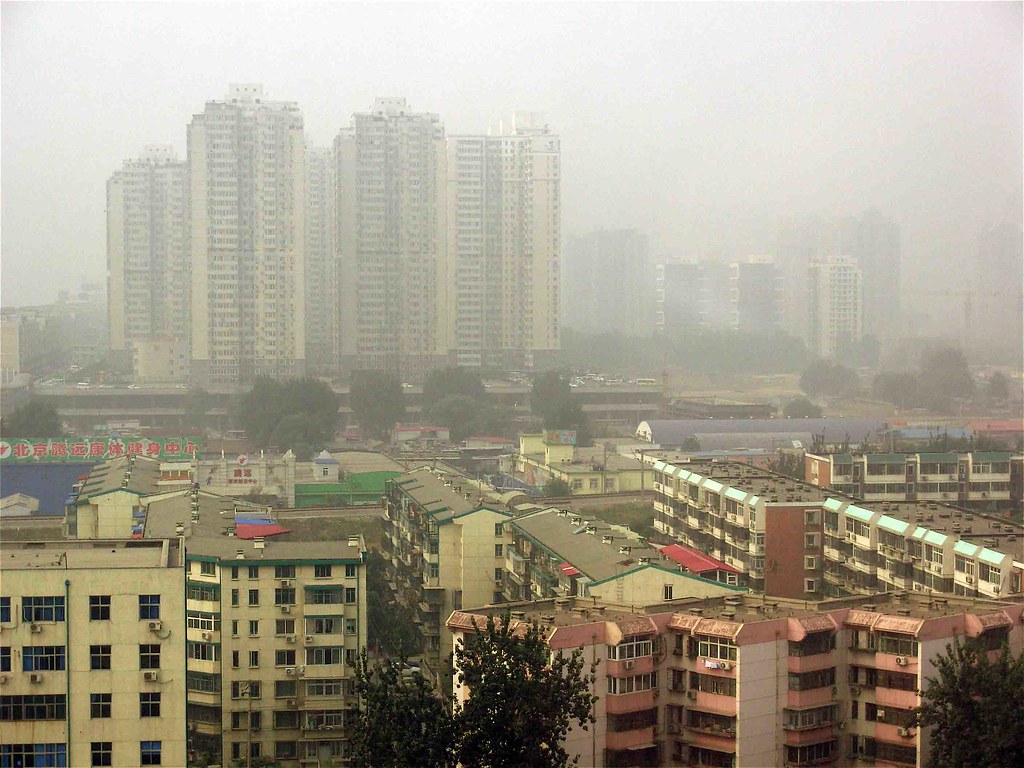
Monthly rents for a two-bedroom apartment in Beijing's Chaoyang District now routinely exceed 8,000 yuan, while the same budget would cover mortgage payments on an owner-occupied flat in Chengdu, Shenyang, or Zhengzhou. That arithmetic is shaping a quiet but consequential shift in how younger workers think about where to plant roots.
The comparison matters right now because China's housing market is in an unusual state of bifurcation. Central government stimulus measures introduced through the People's Bank of China's mortgage rate adjustments in late 2024 and extended into 2025 have made buying cheaper in relative terms in lower-tier cities, even as Beijing landlords, sitting on assets whose value has barely corrected, have kept asking rents elevated. For a generation that watched property prices spike through the 2010s, the classic calculation of renting cheap while saving to buy no longer holds in the capital the way it once did.
The Beijing Premium: What Renters Are Actually Paying
In Sanlitun and the surrounding embassy belt, two-bedroom units listed on Beike (Shell) routinely sit between 9,000 and 13,000 yuan per month. Move west into Haidian District, near the Zhongguancun technology corridor, and the range compresses slightly to 7,500-10,000 yuan, still steep for households earning median Beijing incomes. These are not luxury penthouses; they are standard mid-rise units, often 20 to 30 years old, in buildings managed by scattered individual landlords rather than institutional operators.
The city's government-backed public rental housing program, known locally as gongzu fang, offers subsidised units at below-market rates, but eligibility thresholds are strict and waitlists at key distribution centres, including facilities managed by the Beijing Housing Provident Fund Management Centre, remain long. The program covers a fraction of the demand from the roughly 8 million non-hukou residents estimated to be living and working in the city.
Against that backdrop, the price-to-rent ratio in Beijing's core districts has stretched to levels that fundamentally change the rent-vs-buy calculation. Using figures published by the National Bureau of Statistics for 2025, average new residential property prices in Beijing were among the highest of any mainland city, while rental yields in prime districts hovered below 2 percent annually, meaning buyers receive almost nothing in income return for carrying an asset that costs several million yuan to acquire.
Regional Cities Are Writing a Different Story
In Wuhan's Hongshan District or Xi'an's High-Tech Zone, the calculus flips. Mortgage payments on a 90-square-metre flat purchased at current market prices, supported by loan prime rates that remain at historically accommodative levels following People's Bank adjustments, can come in under 4,500 yuan per month for buyers who qualify for provident fund loan rates. That is roughly half what the same family would spend renting a comparable unit in Chaoyang.
The gap creates a genuine life-planning dilemma for workers who grew up in Hebei or Shandong provinces and moved to Beijing in their twenties. Staying in the capital means career access, headquarters of state-owned enterprises, multinational firms clustered around the Central Business District on Guomao, and the sprawling Zhongguancun science park, but it increasingly means permanent renting, because a down payment on even a modest flat in a district like Tongzhou now requires savings that take a decade or more to accumulate on a professional salary.
For those prepared to move, regional cities are actively competing for mobile talent. Several, including Changsha and Hefei, have in recent years offered direct housing subsidies to qualified graduates, layering on top of already lower asset prices. Beijing's own talent attraction policies, administered partly through the Beijing Municipal Commission of Housing and Urban-Rural Development, have expanded provident fund contribution ceilings and loosened some purchase restriction rules for high-skilled migrants, but those changes have not been enough to close the affordability gap with secondary cities.
Workers weighing the decision in the second half of 2026 should track two things: whether Beijing's municipal government extends or expands its current rental subsidy voucher scheme beyond its pilot neighbourhoods in Shijingshan and Daxing Districts, and whether any further nationwide mortgage rate cuts materialise before year-end. Either development would shift the numbers meaningfully. Until then, the regional cities hold the better deal on paper, even if Beijing still holds the better jobs.
This article is general information only and is not personal financial or investment advice. Consider your own circumstances and seek licensed professional advice before making financial decisions.